Featured Reviews


Aaron Parmet's review...

Angela Peters's review...
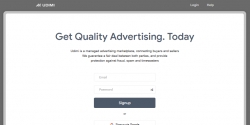
Udimi is a premium marketplace for solo ad sellers and buyers, with over 200 solo ad vendors. The site is free to sign up and you even get $5 OFF your first order.
The Udimi platform has an automatic filter which blocks all bot traffic ensuring that you get 100% real traffic to your offer.
How Udimi works?
After creating you free account you get access to the back office which has profiles of all the vendors in the platform.
Simply click the "Find Sellers" menu tab at the top of the page and you can filter your search according to the following settings.
This way you can get targeted traffic to your offer and have peace of mind knowing a bit more about your vendor.
Once you find the perfect match for your offer you can add them to your favorites or go ahead and make your first purchase by following the following steps.
Step 1:Chose the amount of clicks you would like to order, most vendors have a minimum of 100 visitors.
Step 2: Tick the boxes you would like applied to your order from the following options
Step 3: Paste the link of the website you would like to promote (ad copy is optional)
Step 4: Click ad to cart to complete your purchase
Step 5: Wait for the vendor to accept your order then sit back, relax and watch as the sign ups begin to come in.
Step 6: Go to the "orders" menu tab on the left hand side to check the progress of your order.
What I Like
I like the fact that the Udimi platform has a simple and easy to use interface which allows you to research a vendor to ensure you get the best value for your money.
What I Dislike
To be honest there is nothing I dislike about the platform.
Final Verdict
If you are looking to build your list and generate leads fast then Udimi is a great platform to use, make sure you have a good marketing system with a landing page and a good lead magnet with an auto-responder email series.
Visit Udimi.com
The Udimi platform has an automatic filter which blocks all bot traffic ensuring that you get 100% real traffic to your offer.
How Udimi works?
After creating you free account you get access to the back office which has profiles of all the vendors in the platform.
Simply click the "Find Sellers" menu tab at the top of the page and you can filter your search according to the following settings.
- Price (cost per click)
- Niche
- Ratings
- "Got sales"
This way you can get targeted traffic to your offer and have peace of mind knowing a bit more about your vendor.
Once you find the perfect match for your offer you can add them to your favorites or go ahead and make your first purchase by following the following steps.
Step 1:Chose the amount of clicks you would like to order, most vendors have a minimum of 100 visitors.
Step 2: Tick the boxes you would like applied to your order from the following options
- Base filter (always leave this checked)
- Only Mobile
- Only Top Tier
- Prime filter (only for prime members)
Step 3: Paste the link of the website you would like to promote (ad copy is optional)
Step 4: Click ad to cart to complete your purchase
Step 5: Wait for the vendor to accept your order then sit back, relax and watch as the sign ups begin to come in.
Step 6: Go to the "orders" menu tab on the left hand side to check the progress of your order.
What I Like
I like the fact that the Udimi platform has a simple and easy to use interface which allows you to research a vendor to ensure you get the best value for your money.
What I Dislike
To be honest there is nothing I dislike about the platform.
Final Verdict
If you are looking to build your list and generate leads fast then Udimi is a great platform to use, make sure you have a good marketing system with a landing page and a good lead magnet with an auto-responder email series.
Visit Udimi.com


Omar Saady's review...
Jonathan Montoya 3-Day Training Review: A Beginner-Friendly Starting Point
My experience with the program so far:
One of the hardest parts of starting online is deciding what to build and sell. Creating a product, setting up delivery, writing a sales page, and finding customers can feel like too much at once. Jonathan Montoya's free 3-day training approaches the problem from a simpler angle: learn how to connect people with existing offers and build a system around that process.
The training is positioned for beginners and introduces the idea of developing multiple income streams without first creating a product of your own. The short format is useful because it gives newcomers a defined starting point instead of sending them into an endless library of disconnected lessons.
The program's appeal is its accessibility. A beginner can enter an email address, begin the training, and decide whether the underlying business model is something they want to pursue further.
What I Like
The training is free to start and has a clear three-day structure.
It removes product creation as the first major obstacle.
The presentation is designed for people who are new to online marketing.
It introduces a system and process rather than promising that one random tactic will solve everything.
The short initial commitment makes it easier to start and evaluate.
It can help beginners understand how offers, traffic, follow-up, and commissions fit together.
What I Dislike
Three days can introduce the model, but mastering it takes longer.
Viewers should expect optional paid offers or further training during the journey.
Building income streams still requires traffic, follow-up, testing, and consistent work.
Individual results will vary, and no income amount should be assumed or guaranteed.
Final Verdict
Jonathan Montoya's 3-Day Training is a useful starting point for beginners who want to understand an affiliate-based online business without building a product first. Its greatest strength is simplicity: it gives the user a short path to follow and lets them evaluate the model one step at a time.
This training is not an instant-income solution. The real value depends on whether the student completes the lessons and applies what is taught. For someone seeking a beginner-friendly introduction with a low barrier to entry, it is worth taking a look.
Start the free 3-day training Now
Visit Jonathanmontoyalive.com
My experience with the program so far:
One of the hardest parts of starting online is deciding what to build and sell. Creating a product, setting up delivery, writing a sales page, and finding customers can feel like too much at once. Jonathan Montoya's free 3-day training approaches the problem from a simpler angle: learn how to connect people with existing offers and build a system around that process.
The training is positioned for beginners and introduces the idea of developing multiple income streams without first creating a product of your own. The short format is useful because it gives newcomers a defined starting point instead of sending them into an endless library of disconnected lessons.
The program's appeal is its accessibility. A beginner can enter an email address, begin the training, and decide whether the underlying business model is something they want to pursue further.
What I Like
The training is free to start and has a clear three-day structure.
It removes product creation as the first major obstacle.
The presentation is designed for people who are new to online marketing.
It introduces a system and process rather than promising that one random tactic will solve everything.
The short initial commitment makes it easier to start and evaluate.
It can help beginners understand how offers, traffic, follow-up, and commissions fit together.
What I Dislike
Three days can introduce the model, but mastering it takes longer.
Viewers should expect optional paid offers or further training during the journey.
Building income streams still requires traffic, follow-up, testing, and consistent work.
Individual results will vary, and no income amount should be assumed or guaranteed.
Final Verdict
Jonathan Montoya's 3-Day Training is a useful starting point for beginners who want to understand an affiliate-based online business without building a product first. Its greatest strength is simplicity: it gives the user a short path to follow and lets them evaluate the model one step at a time.
This training is not an instant-income solution. The real value depends on whether the student completes the lessons and applies what is taught. For someone seeking a beginner-friendly introduction with a low barrier to entry, it is worth taking a look.
Start the free 3-day training Now
Visit Jonathanmontoyalive.com

Lahni 's review...
My OLSP Academy Experience-After 15 Years of Searching
I joined OLSP Academy on June 5, 2026, after almost 15 years of searching for a real way to make money online and work from home. Over the years, I found many programs promising hundreds or thousands of dollars. You pay to start, then another offer, another upgrade, another screen, and another payment appears. I kept going in circles and getting nowhere. After so many empty promises, I became very skeptical.
Then I found OLSP Academy.
Since joining, I have learned so much about affiliate marketing, traffic, leads, content, commissions, and online business. Coach Wayne Crowe has taught me things I never knew before, and I truly feel he wants his members to learn, take action, and succeed.
I couldn't believe my eyes when I made my first sale! Then I made more sales. Eventually, I built up my commissions and successfully withdrew money I earned. After searching for almost 15 years, that was a blessing and an amazing feeling.
I've only been here since June 5, 2026, but I have already seen OLSP update and improve its training, tools, features, and earning opportunities. It keeps evolving.
What I Like:
The MegaLink gave me a simple place to start instead of building everything from scratch. OLSP also offers training, live education, community support, traffic strategies, tools, different membership levels, and multiple ways to earn.
What shocked me most was the commission potential. Depending on the eligible offer and membership level, OLSP offers opportunities for 100% up to 400% commissions on certain offers. My jaw dropped when I learned about it! There are also ways to earn through the MegaLink system beyond traditional affiliate sales, and upgrading can unlock additional earning opportunities and higher commission potential.
My favorite part is Earn While You Learn! I'm earning commissions while learning skills I can use in affiliate marketing and online business.
OLSP is not a magic money button. You still have to learn, create content, generate traffic, stay consistent, and take action. Results are not guaranteed and everyone's experience can be different.
Final Verdict:
After almost 15 years of searching, I finally found something that taught me instead of simply selling me another dream. In only a few months, I've learned new skills, made sales, earned commissions, withdrawn my earnings, and watched OLSP Academy continue to improve.
For beginners looking for training, structure, community, tools, and multiple earning opportunities, I believe OLSP Academy is worth exploring.
I didn't just join another affiliate program. I joined an Academy that keeps teaching, improving, updating, and evolving, and I'm growing right along with it.
My biggest takeaway: Earn While You Learn.
Visit Olspsystem.com
I joined OLSP Academy on June 5, 2026, after almost 15 years of searching for a real way to make money online and work from home. Over the years, I found many programs promising hundreds or thousands of dollars. You pay to start, then another offer, another upgrade, another screen, and another payment appears. I kept going in circles and getting nowhere. After so many empty promises, I became very skeptical.
Then I found OLSP Academy.
Since joining, I have learned so much about affiliate marketing, traffic, leads, content, commissions, and online business. Coach Wayne Crowe has taught me things I never knew before, and I truly feel he wants his members to learn, take action, and succeed.
I couldn't believe my eyes when I made my first sale! Then I made more sales. Eventually, I built up my commissions and successfully withdrew money I earned. After searching for almost 15 years, that was a blessing and an amazing feeling.
I've only been here since June 5, 2026, but I have already seen OLSP update and improve its training, tools, features, and earning opportunities. It keeps evolving.
What I Like:
The MegaLink gave me a simple place to start instead of building everything from scratch. OLSP also offers training, live education, community support, traffic strategies, tools, different membership levels, and multiple ways to earn.
What shocked me most was the commission potential. Depending on the eligible offer and membership level, OLSP offers opportunities for 100% up to 400% commissions on certain offers. My jaw dropped when I learned about it! There are also ways to earn through the MegaLink system beyond traditional affiliate sales, and upgrading can unlock additional earning opportunities and higher commission potential.
My favorite part is Earn While You Learn! I'm earning commissions while learning skills I can use in affiliate marketing and online business.
OLSP is not a magic money button. You still have to learn, create content, generate traffic, stay consistent, and take action. Results are not guaranteed and everyone's experience can be different.
Final Verdict:
After almost 15 years of searching, I finally found something that taught me instead of simply selling me another dream. In only a few months, I've learned new skills, made sales, earned commissions, withdrawn my earnings, and watched OLSP Academy continue to improve.
For beginners looking for training, structure, community, tools, and multiple earning opportunities, I believe OLSP Academy is worth exploring.
I didn't just join another affiliate program. I joined an Academy that keeps teaching, improving, updating, and evolving, and I'm growing right along with it.
My biggest takeaway: Earn While You Learn.
Visit Olspsystem.com


Herbert Flores's review...
My experience with CinemaStudio AI so far has been impressive, but not without some frustrations.
I recently tested CinemaStudio AI by creating two short AI films with the software, so this review is based on my actual hands-on experience and not just the sales demo.
My first test was a story with multiple characters and dialogue. This was where I struggled the most. I experienced character consistency issues, some dialogue was assigned to the wrong character, and several scenes didn't connect as clearly as I expected.
For my second test, I changed my approach and kept things much simpler. I created a cinematic action trailer with myself as the only main character, kept the same character reference and outfit, and used narration with minimal dialogue.
The second result was definitely better.
Some of the rainy city scenes, surveillance shots, digital billboards, chase sequences, and action scenes looked surprisingly cinematic. I could really see the potential of using CinemaStudio AI for short films, trailers, and visual storytelling.
However, character consistency was still my biggest issue. My face changed noticeably in some scenes even though I used the same character reference and outfit.
I also learned that you really need to spend time on your prompts and review the storyboard carefully before producing the final movie. Even at the storyboard stage, correcting individual scenes can take some work.
And because AI generations won't always come out exactly the way you want on the first attempt, having enough credits for testing and regeneration is important.
Overall, CinemaStudio AI has a very interesting concept. Being able to go from an idea to story, characters, storyboard, and eventually a complete AI movie in one platform is impressive.
Just don't expect a perfect movie from one click. You still need to direct the AI.
What I Like
The all-in-one workflow is probably what I like most about CinemaStudio AI.
Instead of jumping between several tools, you can develop your idea, create characters, build the storyboard, and produce the movie from the same platform.
I was also impressed by some of the cinematic visuals it generated. My action trailer produced some really nice rainy city environments, surveillance scenes, chase shots, dramatic camera angles, and action sequences.
Another thing I like is being able to see the storyboard before producing the final video. If something looks wrong, you have a chance to correct it before moving forward.
Based on my two tests, I also found that simpler stories with fewer characters were easier to control and gave me better results.
What I Dislike
Character consistency is the biggest area I would like to see improved.
Even when I made myself the only main character in my second film, used the same reference, and kept the same outfit, my face still changed noticeably in some scenes.
Multi-character stories were more difficult for me. In my first test, I experienced issues with character continuity and dialogue being assigned to the wrong character.
Editing and correcting scenes through the storyboard can also become time-consuming when several generations need adjustment.
Credits are another thing to consider. AI filmmaking requires experimentation. If a scene doesn't look right, you may want to regenerate it, change the prompt, or try another version. That can consume credits quickly.
Personally, I still prefer a scene-by-scene AI video workflow when I need strict control over character identity, dialogue, camera movement, and continuity.
Final Verdict
I'm giving CinemaStudio AI 4 out of 5 stars.
I was disappointed with the character consistency, but there are also things I genuinely liked about the software.
The concept is impressive, the workflow is convenient, and some of the cinematic scenes it generated looked really good.
I think the key is understanding that CinemaStudio AI is not simply "enter one idea and get a perfect movie. " Better prompting, careful storyboard review, experimentation, and regeneration can make a big difference in the final result.
If you're serious about using CinemaStudio AI, I would personally look at the Front End together with OTO 1, especially if you plan to experiment and create more AI films.
Here are the available packages I was shown:
FE – CinemaStudio AI Commercial – $37
OTO 1 – CinemaStudio AI UNLIMITED PRO – $67
OTO 2 – CinemaStudio SERIES – $47
OTO 3 – CinemaStudio CinemaBox – $67
OTO 4 – Loop StudioAI – $67
For me, FE + OTO 1 would be the first combination I would consider. The other upgrades would depend on what features you actually need.
Overall, CinemaStudio AI has a lot of potential, especially for creators who like the idea of building an AI movie from one platform. I just hope future updates improve character consistency and give creators even more control over individual scenes.
Visit Thecinemastudio.com
I recently tested CinemaStudio AI by creating two short AI films with the software, so this review is based on my actual hands-on experience and not just the sales demo.
My first test was a story with multiple characters and dialogue. This was where I struggled the most. I experienced character consistency issues, some dialogue was assigned to the wrong character, and several scenes didn't connect as clearly as I expected.
For my second test, I changed my approach and kept things much simpler. I created a cinematic action trailer with myself as the only main character, kept the same character reference and outfit, and used narration with minimal dialogue.
The second result was definitely better.
Some of the rainy city scenes, surveillance shots, digital billboards, chase sequences, and action scenes looked surprisingly cinematic. I could really see the potential of using CinemaStudio AI for short films, trailers, and visual storytelling.
However, character consistency was still my biggest issue. My face changed noticeably in some scenes even though I used the same character reference and outfit.
I also learned that you really need to spend time on your prompts and review the storyboard carefully before producing the final movie. Even at the storyboard stage, correcting individual scenes can take some work.
And because AI generations won't always come out exactly the way you want on the first attempt, having enough credits for testing and regeneration is important.
Overall, CinemaStudio AI has a very interesting concept. Being able to go from an idea to story, characters, storyboard, and eventually a complete AI movie in one platform is impressive.
Just don't expect a perfect movie from one click. You still need to direct the AI.
What I Like
The all-in-one workflow is probably what I like most about CinemaStudio AI.
Instead of jumping between several tools, you can develop your idea, create characters, build the storyboard, and produce the movie from the same platform.
I was also impressed by some of the cinematic visuals it generated. My action trailer produced some really nice rainy city environments, surveillance scenes, chase shots, dramatic camera angles, and action sequences.
Another thing I like is being able to see the storyboard before producing the final video. If something looks wrong, you have a chance to correct it before moving forward.
Based on my two tests, I also found that simpler stories with fewer characters were easier to control and gave me better results.
What I Dislike
Character consistency is the biggest area I would like to see improved.
Even when I made myself the only main character in my second film, used the same reference, and kept the same outfit, my face still changed noticeably in some scenes.
Multi-character stories were more difficult for me. In my first test, I experienced issues with character continuity and dialogue being assigned to the wrong character.
Editing and correcting scenes through the storyboard can also become time-consuming when several generations need adjustment.
Credits are another thing to consider. AI filmmaking requires experimentation. If a scene doesn't look right, you may want to regenerate it, change the prompt, or try another version. That can consume credits quickly.
Personally, I still prefer a scene-by-scene AI video workflow when I need strict control over character identity, dialogue, camera movement, and continuity.
Final Verdict
I'm giving CinemaStudio AI 4 out of 5 stars.
I was disappointed with the character consistency, but there are also things I genuinely liked about the software.
The concept is impressive, the workflow is convenient, and some of the cinematic scenes it generated looked really good.
I think the key is understanding that CinemaStudio AI is not simply "enter one idea and get a perfect movie. " Better prompting, careful storyboard review, experimentation, and regeneration can make a big difference in the final result.
If you're serious about using CinemaStudio AI, I would personally look at the Front End together with OTO 1, especially if you plan to experiment and create more AI films.
Here are the available packages I was shown:
FE – CinemaStudio AI Commercial – $37
OTO 1 – CinemaStudio AI UNLIMITED PRO – $67
OTO 2 – CinemaStudio SERIES – $47
OTO 3 – CinemaStudio CinemaBox – $67
OTO 4 – Loop StudioAI – $67
For me, FE + OTO 1 would be the first combination I would consider. The other upgrades would depend on what features you actually need.
Overall, CinemaStudio AI has a lot of potential, especially for creators who like the idea of building an AI movie from one platform. I just hope future updates improve character consistency and give creators even more control over individual scenes.
Visit Thecinemastudio.com

Joy Healey's review...
Update June 2024 and September 2026
Just been reviewing my reviews at LeadsLeap :-)
The site has had a complete revamp and now looks smart and built for 2026 and beyond.
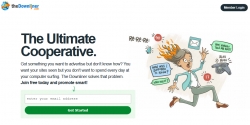
Some I have deleted as they didn't stand the test of time, but The Downliner is still firmly on my favourites list and sending me traffic (especially from the Social Posts). I am still getting renewal commissions from people I have recommended to The Downliner, so they are presumably as happy as I am with it.
My experience with the program so far
I first joined this program six years ago, then left it while I had a break from online business, but I always remembered it fondly.
So when I came back online and was reminded of it, I was pleased to restart my paid membership, and, within my first month, someone who found a site I'm advertising on The Downliner joined my business. That's more than covered the cost of my first month's membership.
I have, since then, paid to become a lifetime member, eliminating monthly costs.
Within my own contacts I have recruited two TDL team members who have been equally impressed with the site, Both have upgraded too, and stayed long term members. My commission was registered promptly (can be withdrawn when it reaches $20), although I tend to use it to buy further advertising. I found several 'free' members too, but it's not uncommon that T/E members stay free.
What I Like
What I Dislike
I wish there was a way that I could target specific countries, but nothing else.
Final Verdict
Advertising on the Downliner is saving me a ton of time and money while building my list, and - most important of all - I know it's genuine traffic because I have already had an email exchange with a lead who took a paid upgrade.
Highly recommended.
Visit Thedownliner.com
Just been reviewing my reviews at LeadsLeap :-)
The site has had a complete revamp and now looks smart and built for 2026 and beyond.
Some I have deleted as they didn't stand the test of time, but The Downliner is still firmly on my favourites list and sending me traffic (especially from the Social Posts). I am still getting renewal commissions from people I have recommended to The Downliner, so they are presumably as happy as I am with it.
My experience with the program so far
I first joined this program six years ago, then left it while I had a break from online business, but I always remembered it fondly.
So when I came back online and was reminded of it, I was pleased to restart my paid membership, and, within my first month, someone who found a site I'm advertising on The Downliner joined my business. That's more than covered the cost of my first month's membership.
I have, since then, paid to become a lifetime member, eliminating monthly costs.
Within my own contacts I have recruited two TDL team members who have been equally impressed with the site, Both have upgraded too, and stayed long term members. My commission was registered promptly (can be withdrawn when it reaches $20), although I tend to use it to buy further advertising. I found several 'free' members too, but it's not uncommon that T/E members stay free.
What I Like
- There are 3 levels of membership, one is free and the other two are extremely good value.
- Free members can earn from their referrals
- There's a low ($20) threshold to withdraw your commissions
- You're only 'charged for' unique views, other views are classed as Free Views.
- Support is excellent, I even had prompt answers over the weekend
- A splash page creator
- The Machine is a new feature, where, if you join a program through an existing member, your site will be rotated
- The TDL detailed stats show where my link is being seen and how long visitors stay on my site
- You can earn 'shop points' to use in your own promotions, by promoting a co-op link
- Otherwise you can buy 'shop points' at an extremely low cost, or by upgrading
- You can 'win' points with a daily wheel spin, and I win regularly - maybe 75% of the time.
- You can also earn points by clicking on solo-ads that come to my in-box, clearly labelled.
- Traffic is coming from a vast array of sources including PTCs, Safelists, Traffic Exchanges, Classified Ads, CPC traffic and well as social media I received thousands of clicks in just a few days for 5 minutes 'work' placing my social media post link on the TDL ads section.
- Most important of all, my links are being rotated on more traffic exchanges than I've even heard of. There's no way I could cover afford the time or money to promote on all those sites personally.
What I Dislike
I wish there was a way that I could target specific countries, but nothing else.
Final Verdict
Advertising on the Downliner is saving me a ton of time and money while building my list, and - most important of all - I know it's genuine traffic because I have already had an email exchange with a lead who took a paid upgrade.
Highly recommended.
Visit Thedownliner.com
Daily Ads is a fairly unique platform that combines traffic exposure, external downline building, and its own internal compensation plan.
I decided to join after spending some time understanding how all the pieces fit together. It isn't immediately obvious at first, but once it starts to make sense, the overall structure becomes clearer.
At a high level, Daily Ads can be used in a few different ways. You can promote your own programs, focus on promoting Daily Ads itself through its compensation plan, build downlines in popular third-party programs using the built-in downline builder, or combine several of these approaches.
The downline builder includes established programs such as LeadsLeap, LiveGood, OLSP, and others. That was a major factor for me, since it allows participation in proven programs that already have active users and ongoing interest.
What I Like
What I like most is that the downline builder feels like a core part of the platform rather than an add-on. It's clearly something the system is designed around, not just an extra feature added later.
I also like being able to use a single link to build exposure across multiple popular programs at the same time. There is a learning curve, but once it clicks, this approach feels efficient and different from how most affiliates typically promote these programs.
The back office is another positive. It feels modern and custom-built, and pages load quickly. In day-to-day use, it doesn't feel slow or clunky, which makes it easier to work with consistently. Support and leadership for the platform is responsive, engaged with members and overall really top notch.
What I Dislike
Update: My previous concern was the limited promotional resources, but that has improved significantly. Admin continues adding new member benefits, including more exposure methods and DFY funnels for the third-party programs in the downline builder.
The biggest drawback is still the learning curve. There are a lot of moving parts, and new features are added regularly, so it can feel overwhelming at first. That said, I also see this as a strength because the platform is continually improving rather than becoming stagnant.
Final Verdict
Overall, Daily Ads is a creative concept with practical use cases once you understand how it works. It's not a simple, plug-and-play system, but it offers flexibility that I haven't seen handled quite this way elsewhere.
It won't be for everyone, especially those looking for something very basic. For my own use, though, it's been worth keeping active, and I'm interested to see how it develops as more features are added.
Visit Daily-ads.com