Featured Reviews


Bradley Edwards's review...


Neville Easley's review...
My Experience With Massifly.com So Far
My experience with Massifly.com so far has been very interesting. What immediately grabbed my attention is that it combines advertising, traffic, clicks, and crypto rewards inside one ecosystem instead of focusing on only one feature.
As an online marketer, I'm always looking for resources that can help me put more REAL EYEBALLS in front of my offers while giving me additional ways to benefit from my activity inside the platform.
What I Like
What stands out most to me is the ability to advertise my business while participating in the ecosystem.
I like having multiple advertising tools under one roof, including opportunities to generate traffic and promote different offers. I also like the crypto component and the idea of being rewarded for certain activities inside the platform.
For marketers who already spend money and time trying to generate exposure, having traffic + advertising + rewards together is what makes Massifly interesting to me.
Another BIG plus is the simplicity. I can log in, work the advertising side of the platform, build my exposure, and continue developing my strategy without needing several different resources.
What I Dislike
No program is perfect, and Massifly is no exception.
There can be a learning curve when you first enter because there are multiple features, advertising options, and ways to participate. I believe new members should take some time to understand the system instead of jumping in expecting instant results.
I would also never look at any online platform as guaranteed income. Traffic does not automatically equal sales, and individual results can vary depending on your offer, marketing, activity, strategy, and other factors.
Final Verdict
So far, I see Massifly.com as much more than just another advertising site.
For me, its biggest attraction is bringing TRAFFIC + ADVERTISING + CRYPTO 🪙 + REWARD OPPORTUNITIES together in one ecosystem.
If you're a marketer, business owner, or entrepreneur looking for additional exposure for your offers, I believe it's worth taking a closer look and deciding for yourself.
My verdict so far: I'm using it, I'm learning it, and I'm putting it to work.
Don't take my word for it, look inside, understand how it works, and make your own decision.
Results and rewards are not guaranteed. Individual experiences may vary.
Visit Massifly.com
My experience with Massifly.com so far has been very interesting. What immediately grabbed my attention is that it combines advertising, traffic, clicks, and crypto rewards inside one ecosystem instead of focusing on only one feature.
As an online marketer, I'm always looking for resources that can help me put more REAL EYEBALLS in front of my offers while giving me additional ways to benefit from my activity inside the platform.
What I Like
What stands out most to me is the ability to advertise my business while participating in the ecosystem.
I like having multiple advertising tools under one roof, including opportunities to generate traffic and promote different offers. I also like the crypto component and the idea of being rewarded for certain activities inside the platform.
For marketers who already spend money and time trying to generate exposure, having traffic + advertising + rewards together is what makes Massifly interesting to me.
Another BIG plus is the simplicity. I can log in, work the advertising side of the platform, build my exposure, and continue developing my strategy without needing several different resources.
What I Dislike
No program is perfect, and Massifly is no exception.
There can be a learning curve when you first enter because there are multiple features, advertising options, and ways to participate. I believe new members should take some time to understand the system instead of jumping in expecting instant results.
I would also never look at any online platform as guaranteed income. Traffic does not automatically equal sales, and individual results can vary depending on your offer, marketing, activity, strategy, and other factors.
Final Verdict
So far, I see Massifly.com as much more than just another advertising site.
For me, its biggest attraction is bringing TRAFFIC + ADVERTISING + CRYPTO 🪙 + REWARD OPPORTUNITIES together in one ecosystem.
If you're a marketer, business owner, or entrepreneur looking for additional exposure for your offers, I believe it's worth taking a closer look and deciding for yourself.
My verdict so far: I'm using it, I'm learning it, and I'm putting it to work.
Don't take my word for it, look inside, understand how it works, and make your own decision.
Results and rewards are not guaranteed. Individual experiences may vary.
Visit Massifly.com


Herbert Flores's review...
My experience with CinemaStudio AI so far has been impressive, but not without some frustrations.
I recently tested CinemaStudio AI by creating two short AI films with the software, so this review is based on my actual hands-on experience and not just the sales demo.
My first test was a story with multiple characters and dialogue. This was where I struggled the most. I experienced character consistency issues, some dialogue was assigned to the wrong character, and several scenes didn't connect as clearly as I expected.
For my second test, I changed my approach and kept things much simpler. I created a cinematic action trailer with myself as the only main character, kept the same character reference and outfit, and used narration with minimal dialogue.
The second result was definitely better.
Some of the rainy city scenes, surveillance shots, digital billboards, chase sequences, and action scenes looked surprisingly cinematic. I could really see the potential of using CinemaStudio AI for short films, trailers, and visual storytelling.
However, character consistency was still my biggest issue. My face changed noticeably in some scenes even though I used the same character reference and outfit.
I also learned that you really need to spend time on your prompts and review the storyboard carefully before producing the final movie. Even at the storyboard stage, correcting individual scenes can take some work.
And because AI generations won't always come out exactly the way you want on the first attempt, having enough credits for testing and regeneration is important.
Overall, CinemaStudio AI has a very interesting concept. Being able to go from an idea to story, characters, storyboard, and eventually a complete AI movie in one platform is impressive.
Just don't expect a perfect movie from one click. You still need to direct the AI.
What I Like
The all-in-one workflow is probably what I like most about CinemaStudio AI.
Instead of jumping between several tools, you can develop your idea, create characters, build the storyboard, and produce the movie from the same platform.
I was also impressed by some of the cinematic visuals it generated. My action trailer produced some really nice rainy city environments, surveillance scenes, chase shots, dramatic camera angles, and action sequences.
Another thing I like is being able to see the storyboard before producing the final video. If something looks wrong, you have a chance to correct it before moving forward.
Based on my two tests, I also found that simpler stories with fewer characters were easier to control and gave me better results.
What I Dislike
Character consistency is the biggest area I would like to see improved.
Even when I made myself the only main character in my second film, used the same reference, and kept the same outfit, my face still changed noticeably in some scenes.
Multi-character stories were more difficult for me. In my first test, I experienced issues with character continuity and dialogue being assigned to the wrong character.
Editing and correcting scenes through the storyboard can also become time-consuming when several generations need adjustment.
Credits are another thing to consider. AI filmmaking requires experimentation. If a scene doesn't look right, you may want to regenerate it, change the prompt, or try another version. That can consume credits quickly.
Personally, I still prefer a scene-by-scene AI video workflow when I need strict control over character identity, dialogue, camera movement, and continuity.
Final Verdict
I'm giving CinemaStudio AI 4 out of 5 stars.
I was disappointed with the character consistency, but there are also things I genuinely liked about the software.
The concept is impressive, the workflow is convenient, and some of the cinematic scenes it generated looked really good.
I think the key is understanding that CinemaStudio AI is not simply "enter one idea and get a perfect movie. " Better prompting, careful storyboard review, experimentation, and regeneration can make a big difference in the final result.
If you're serious about using CinemaStudio AI, I would personally look at the Front End together with OTO 1, especially if you plan to experiment and create more AI films.
Here are the available packages I was shown:
FE – CinemaStudio AI Commercial – $37
OTO 1 – CinemaStudio AI UNLIMITED PRO – $67
OTO 2 – CinemaStudio SERIES – $47
OTO 3 – CinemaStudio CinemaBox – $67
OTO 4 – Loop StudioAI – $67
For me, FE + OTO 1 would be the first combination I would consider. The other upgrades would depend on what features you actually need.
Overall, CinemaStudio AI has a lot of potential, especially for creators who like the idea of building an AI movie from one platform. I just hope future updates improve character consistency and give creators even more control over individual scenes.
Visit Thecinemastudio.com
I recently tested CinemaStudio AI by creating two short AI films with the software, so this review is based on my actual hands-on experience and not just the sales demo.
My first test was a story with multiple characters and dialogue. This was where I struggled the most. I experienced character consistency issues, some dialogue was assigned to the wrong character, and several scenes didn't connect as clearly as I expected.
For my second test, I changed my approach and kept things much simpler. I created a cinematic action trailer with myself as the only main character, kept the same character reference and outfit, and used narration with minimal dialogue.
The second result was definitely better.
Some of the rainy city scenes, surveillance shots, digital billboards, chase sequences, and action scenes looked surprisingly cinematic. I could really see the potential of using CinemaStudio AI for short films, trailers, and visual storytelling.
However, character consistency was still my biggest issue. My face changed noticeably in some scenes even though I used the same character reference and outfit.
I also learned that you really need to spend time on your prompts and review the storyboard carefully before producing the final movie. Even at the storyboard stage, correcting individual scenes can take some work.
And because AI generations won't always come out exactly the way you want on the first attempt, having enough credits for testing and regeneration is important.
Overall, CinemaStudio AI has a very interesting concept. Being able to go from an idea to story, characters, storyboard, and eventually a complete AI movie in one platform is impressive.
Just don't expect a perfect movie from one click. You still need to direct the AI.
What I Like
The all-in-one workflow is probably what I like most about CinemaStudio AI.
Instead of jumping between several tools, you can develop your idea, create characters, build the storyboard, and produce the movie from the same platform.
I was also impressed by some of the cinematic visuals it generated. My action trailer produced some really nice rainy city environments, surveillance scenes, chase shots, dramatic camera angles, and action sequences.
Another thing I like is being able to see the storyboard before producing the final video. If something looks wrong, you have a chance to correct it before moving forward.
Based on my two tests, I also found that simpler stories with fewer characters were easier to control and gave me better results.
What I Dislike
Character consistency is the biggest area I would like to see improved.
Even when I made myself the only main character in my second film, used the same reference, and kept the same outfit, my face still changed noticeably in some scenes.
Multi-character stories were more difficult for me. In my first test, I experienced issues with character continuity and dialogue being assigned to the wrong character.
Editing and correcting scenes through the storyboard can also become time-consuming when several generations need adjustment.
Credits are another thing to consider. AI filmmaking requires experimentation. If a scene doesn't look right, you may want to regenerate it, change the prompt, or try another version. That can consume credits quickly.
Personally, I still prefer a scene-by-scene AI video workflow when I need strict control over character identity, dialogue, camera movement, and continuity.
Final Verdict
I'm giving CinemaStudio AI 4 out of 5 stars.
I was disappointed with the character consistency, but there are also things I genuinely liked about the software.
The concept is impressive, the workflow is convenient, and some of the cinematic scenes it generated looked really good.
I think the key is understanding that CinemaStudio AI is not simply "enter one idea and get a perfect movie. " Better prompting, careful storyboard review, experimentation, and regeneration can make a big difference in the final result.
If you're serious about using CinemaStudio AI, I would personally look at the Front End together with OTO 1, especially if you plan to experiment and create more AI films.
Here are the available packages I was shown:
FE – CinemaStudio AI Commercial – $37
OTO 1 – CinemaStudio AI UNLIMITED PRO – $67
OTO 2 – CinemaStudio SERIES – $47
OTO 3 – CinemaStudio CinemaBox – $67
OTO 4 – Loop StudioAI – $67
For me, FE + OTO 1 would be the first combination I would consider. The other upgrades would depend on what features you actually need.
Overall, CinemaStudio AI has a lot of potential, especially for creators who like the idea of building an AI movie from one platform. I just hope future updates improve character consistency and give creators even more control over individual scenes.
Visit Thecinemastudio.com

Jimmy Chin's review...
My experience with the program so far
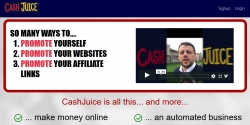
I joined CashJuice as a paid member because I was looking for another platform where I could promote my affiliate programs, connect with other online marketers, and explore new ways to grow my online business.
So far, my experience has been very positive. What I enjoy most about CashJuice is that it is not just another advertising platform where you simply post your link and hope for results. It gives members a place to interact, discover different opportunities, and be part of an active online marketing community.
As an affiliate marketer, I know how challenging it can be to get attention and reach the right audience. CashJuice gives me another channel to promote my offers and build visibility without depending only on social media or other advertising methods.
I also like that I can use CashJuice to promote the platform itself as an affiliate. It creates an opportunity where I can benefit from using the program while sharing it with others who may also find value in it.
For me, the biggest benefit is the combination of advertising, networking, and learning. Being around other members who are also building their online businesses gives me motivation and new ideas.
What I Like
The biggest thing I like about CashJuice is the community aspect.
Many online platforms focus only on traffic and advertising, but CashJuice feels more personal because members can connect with each other, exchange ideas, and learn from different experiences.
I also like the flexibility of the platform. I can use it to promote my own affiliate programs, discover other opportunities, and earn commissions as a CashJuice affiliate.
Another advantage is that it is suitable for both beginners and experienced marketers. Beginners can learn by exploring the platform, while experienced marketers have another tool to add to their marketing strategy.
I also appreciate that CashJuice encourages members to be active. The more effort you put into learning, promoting, and networking, the more value you can get from the platform.
What I Dislike
Like any program, CashJuice is not perfect.
One thing new members may experience is that there are many features available, so it can take some time to understand everything when first joining. It requires some exploration before you become comfortable using all the tools.
Another thing is that CashJuice is not a "join today and make money tomorrow" type of program. Members still need to take action, promote consistently, and build relationships. The results you get depend on the effort you put in.
Personally, I see this more as a positive reminder because any real online business requires time, learning, and consistency.
Final Verdict
Overall, my experience with CashJuice has been very positive.
I believe CashJuice is a valuable platform for anyone interested in affiliate marketing, online advertising, networking, and building online connections.
What I like most is that it provides more than just a place to advertise. It gives members an opportunity to learn, connect, promote, and grow together.
If you are someone who is willing to put in the effort and actively participate, I believe CashJuice is definitely worth exploring.
Visit Cashjuice.com
I joined CashJuice as a paid member because I was looking for another platform where I could promote my affiliate programs, connect with other online marketers, and explore new ways to grow my online business.
So far, my experience has been very positive. What I enjoy most about CashJuice is that it is not just another advertising platform where you simply post your link and hope for results. It gives members a place to interact, discover different opportunities, and be part of an active online marketing community.
As an affiliate marketer, I know how challenging it can be to get attention and reach the right audience. CashJuice gives me another channel to promote my offers and build visibility without depending only on social media or other advertising methods.
I also like that I can use CashJuice to promote the platform itself as an affiliate. It creates an opportunity where I can benefit from using the program while sharing it with others who may also find value in it.
For me, the biggest benefit is the combination of advertising, networking, and learning. Being around other members who are also building their online businesses gives me motivation and new ideas.
What I Like
The biggest thing I like about CashJuice is the community aspect.
Many online platforms focus only on traffic and advertising, but CashJuice feels more personal because members can connect with each other, exchange ideas, and learn from different experiences.
I also like the flexibility of the platform. I can use it to promote my own affiliate programs, discover other opportunities, and earn commissions as a CashJuice affiliate.
Another advantage is that it is suitable for both beginners and experienced marketers. Beginners can learn by exploring the platform, while experienced marketers have another tool to add to their marketing strategy.
I also appreciate that CashJuice encourages members to be active. The more effort you put into learning, promoting, and networking, the more value you can get from the platform.
What I Dislike
Like any program, CashJuice is not perfect.
One thing new members may experience is that there are many features available, so it can take some time to understand everything when first joining. It requires some exploration before you become comfortable using all the tools.
Another thing is that CashJuice is not a "join today and make money tomorrow" type of program. Members still need to take action, promote consistently, and build relationships. The results you get depend on the effort you put in.
Personally, I see this more as a positive reminder because any real online business requires time, learning, and consistency.
Final Verdict
Overall, my experience with CashJuice has been very positive.
I believe CashJuice is a valuable platform for anyone interested in affiliate marketing, online advertising, networking, and building online connections.
What I like most is that it provides more than just a place to advertise. It gives members an opportunity to learn, connect, promote, and grow together.
If you are someone who is willing to put in the effort and actively participate, I believe CashJuice is definitely worth exploring.
Visit Cashjuice.com


Michael Williams's review...
I've not been registered with easycash4ads long but I already see great things.
Initially I joined because of the promise of multiple $10 commissions plus the potential to get more traffic to my main opportunity.
However, once I'd paid my fee and accessed the back office I learned that the $10 commissions were just a small way to gain and additional income.
With this program you gain rights to multiple products you can sell.
This is GOLD!
Every month a new product is released.
This is the cheapest site I've found that provides such products.
In addition to these features I love that training is provided to help people achieve success with this program.
This makes this program ideal for those who are new to the internet marketing industry.
My sponsor has provided additional training and support.
I really love the fact that the cost of this program is so affordable which also greatly reduces the 'risk' of joining the business.
The only gripe I have with this program is that I'd like to see more products supplied with a sales page.
This would make life so much easier for resellers. But it's not an insurmountable problem and should not impact negatively on the ability to profit from selling these products.
The quality of the products is an easy motivator to help with gaining referrals, who will also see the advert for your main site.
Visit Easycash4ads.com
Initially I joined because of the promise of multiple $10 commissions plus the potential to get more traffic to my main opportunity.
However, once I'd paid my fee and accessed the back office I learned that the $10 commissions were just a small way to gain and additional income.
With this program you gain rights to multiple products you can sell.
This is GOLD!
Every month a new product is released.
This is the cheapest site I've found that provides such products.
In addition to these features I love that training is provided to help people achieve success with this program.
This makes this program ideal for those who are new to the internet marketing industry.
My sponsor has provided additional training and support.
I really love the fact that the cost of this program is so affordable which also greatly reduces the 'risk' of joining the business.
The only gripe I have with this program is that I'd like to see more products supplied with a sales page.
This would make life so much easier for resellers. But it's not an insurmountable problem and should not impact negatively on the ability to profit from selling these products.
The quality of the products is an easy motivator to help with gaining referrals, who will also see the advert for your main site.
Visit Easycash4ads.com


Omar Saady's review...
Jonathan Montoya 3-Day Training Review: A Beginner-Friendly Starting Point
My experience with the program so far:
One of the hardest parts of starting online is deciding what to build and sell. Creating a product, setting up delivery, writing a sales page, and finding customers can feel like too much at once. Jonathan Montoya's free 3-day training approaches the problem from a simpler angle: learn how to connect people with existing offers and build a system around that process.
The training is positioned for beginners and introduces the idea of developing multiple income streams without first creating a product of your own. The short format is useful because it gives newcomers a defined starting point instead of sending them into an endless library of disconnected lessons.
The program's appeal is its accessibility. A beginner can enter an email address, begin the training, and decide whether the underlying business model is something they want to pursue further.
What I Like
The training is free to start and has a clear three-day structure.
It removes product creation as the first major obstacle.
The presentation is designed for people who are new to online marketing.
It introduces a system and process rather than promising that one random tactic will solve everything.
The short initial commitment makes it easier to start and evaluate.
It can help beginners understand how offers, traffic, follow-up, and commissions fit together.
What I Dislike
Three days can introduce the model, but mastering it takes longer.
Viewers should expect optional paid offers or further training during the journey.
Building income streams still requires traffic, follow-up, testing, and consistent work.
Individual results will vary, and no income amount should be assumed or guaranteed.
Final Verdict
Jonathan Montoya's 3-Day Training is a useful starting point for beginners who want to understand an affiliate-based online business without building a product first. Its greatest strength is simplicity: it gives the user a short path to follow and lets them evaluate the model one step at a time.
This training is not an instant-income solution. The real value depends on whether the student completes the lessons and applies what is taught. For someone seeking a beginner-friendly introduction with a low barrier to entry, it is worth taking a look.
Start the free 3-day training Now
Visit Jonathanmontoyalive.com
My experience with the program so far:
One of the hardest parts of starting online is deciding what to build and sell. Creating a product, setting up delivery, writing a sales page, and finding customers can feel like too much at once. Jonathan Montoya's free 3-day training approaches the problem from a simpler angle: learn how to connect people with existing offers and build a system around that process.
The training is positioned for beginners and introduces the idea of developing multiple income streams without first creating a product of your own. The short format is useful because it gives newcomers a defined starting point instead of sending them into an endless library of disconnected lessons.
The program's appeal is its accessibility. A beginner can enter an email address, begin the training, and decide whether the underlying business model is something they want to pursue further.
What I Like
The training is free to start and has a clear three-day structure.
It removes product creation as the first major obstacle.
The presentation is designed for people who are new to online marketing.
It introduces a system and process rather than promising that one random tactic will solve everything.
The short initial commitment makes it easier to start and evaluate.
It can help beginners understand how offers, traffic, follow-up, and commissions fit together.
What I Dislike
Three days can introduce the model, but mastering it takes longer.
Viewers should expect optional paid offers or further training during the journey.
Building income streams still requires traffic, follow-up, testing, and consistent work.
Individual results will vary, and no income amount should be assumed or guaranteed.
Final Verdict
Jonathan Montoya's 3-Day Training is a useful starting point for beginners who want to understand an affiliate-based online business without building a product first. Its greatest strength is simplicity: it gives the user a short path to follow and lets them evaluate the model one step at a time.
This training is not an instant-income solution. The real value depends on whether the student completes the lessons and applies what is taught. For someone seeking a beginner-friendly introduction with a low barrier to entry, it is worth taking a look.
Start the free 3-day training Now
Visit Jonathanmontoyalive.com
I've tested a lot of lead generation programs over the years. Some promise massive lists but deliver junk traffic. Others are so complicated that you burn out before you see results. When I joined The 5000 Daily Leads Club, I honestly wasn't sure what to expect.
What I found was refreshingly straightforward.
Forget chasing viral spikes or wasting money on random traffic that never converts. Real, sustainable list growth comes from one thing: consistency.
That's exactly what this system is built around.
The concept is refreshingly simple: daily exposure, a proven traffic rotation, and a predictable process that helps you grow your email list one day at a time. Instead of hoping for a lucky breakthrough, you're building momentum with consistent visibility that keeps working in the background.
Since joining, I've seen a steady stream of new opt-ins. It wasn't an unrealistic overnight explosion, and that's exactly why I trust it. Day after day, new subscribers continue to come in, and those small wins have compounded into meaningful, measurable growth.
What really stood out to me was how incredibly easy it is to use. There's no complicated funnel building, no technical headaches, and no endless tweaking. Simply add your link, follow the system, and stay consistent. That's it. The process is designed so you can spend less time figuring things out and more time growing your business.
Even better, the traffic doesn't feel random. The people viewing your offer are real marketers and opportunity seekers who are actively looking for new opportunities. That makes every impression more valuable and every opt-in feel far more targeted than the hit-or-miss traffic you often get from solo ads or other paid sources.
If you're tired of chasing shortcuts and you're ready for a system that rewards consistency with steady, long-term growth, this is a refreshing alternative that simply works.
What I Like
1. I like the simplicity. You don't need advanced tech skills to participate. The setup process is quick, and once you're in rotation, you're building exposure daily.
2. I appreciate the consistency. Many programs rely on hype. This one relies on activity. When you show up and follow through, you see steady movement. That predictability is powerful for list builders.
3. It's community-driven. You're surrounded by other marketers who are also promoting their opportunities. That creates an ecosystem where everyone benefits from shared visibility.
4. It encourages long-term thinking. This isn't a "get rich tomorrow" system. It's a "build daily and let it compound" system. For serious marketers, that mindset is gold.
What I Dislike
1. The biggest thing to understand is that results require consistency.
2. The program sends visitors, but conversion is still on you.
Final Verdict
If you're serious about building a list and you understand the value of daily, consistent exposure, the 5000 Daily Leads Club is worth considering. From my experience so far, it delivers steady visibility and real lead potential for those who stay active. If you're willing to plug in, follow the process, and focus on long-term growth, this platform can absolutely become a strong piece of your lead generation strategy.
Visit 5000leads.club