Featured Reviews


Keith Dyer's review...


Linda Bomba's review...
My experience so far
I've been using Twice Confirmed Traffic so far and I'm honestly impressed with the results. I started getting clicks almost immediately after launching my campaign, and I've already generated 9 leads in a short amount of time.
What I really like is that the traffic feels much more targeted compared to other traffic sources I've tried. The setup process was simple, beginner-friendly, and easy to follow. Instead of wasting money on random clicks, I'm actually seeing real activity and engagement.
Of course, like any traffic source, results will vary depending on your offer and follow-up, but my experience so far has been very positive. If you're looking for affordable traffic and a way to generate leads quickly, Twice Confirmed Traffic is definitely worth checking out.
I'm excited to keep testing and scaling my campaigns with it since I am doing a case study to track my results.
What I Like
I am consistently getting 200 clicks a day for 59.95 which is a great value since if you ordered 200 clicks from a solo ad vendor or Udimi top tier 1 would be $97.
What I Dislike
There is no one to buy more traffic the only you can any extra is by referring people which you can get up to 200% more traffic and I am seeing some people create multiple accounts which it is against their affiliate agreement so they are risking their accounts.
Final Verdict
I started getting clicks immediately so in 3 days I have gotten 695 clicks and 9 leads so I am documenting my results with since all of the reviews I read people all of them reported getting sales.
Visit Twiceconfirmedtraffic.com
I've been using Twice Confirmed Traffic so far and I'm honestly impressed with the results. I started getting clicks almost immediately after launching my campaign, and I've already generated 9 leads in a short amount of time.
What I really like is that the traffic feels much more targeted compared to other traffic sources I've tried. The setup process was simple, beginner-friendly, and easy to follow. Instead of wasting money on random clicks, I'm actually seeing real activity and engagement.
Of course, like any traffic source, results will vary depending on your offer and follow-up, but my experience so far has been very positive. If you're looking for affordable traffic and a way to generate leads quickly, Twice Confirmed Traffic is definitely worth checking out.
I'm excited to keep testing and scaling my campaigns with it since I am doing a case study to track my results.
What I Like
I am consistently getting 200 clicks a day for 59.95 which is a great value since if you ordered 200 clicks from a solo ad vendor or Udimi top tier 1 would be $97.
What I Dislike
There is no one to buy more traffic the only you can any extra is by referring people which you can get up to 200% more traffic and I am seeing some people create multiple accounts which it is against their affiliate agreement so they are risking their accounts.
Final Verdict
I started getting clicks immediately so in 3 days I have gotten 695 clicks and 9 leads so I am documenting my results with since all of the reviews I read people all of them reported getting sales.
Visit Twiceconfirmedtraffic.com

Slavisa Velickovic's review...
My experience with the program so far
I've been using LeadsLeap for some time now, and my overall experience is mixed. On one hand, the platform offers a wide range of tools – traffic exchange, page builder, email marketing, link tracking, and more – all in one place. It has been around since 2008 and has evolved over time by adding many features. However, the biggest challenge I faced is the complexity. The system includes many different tools and sections, and it's not always clear how everything connects. Instead of a simple flow, you often feel like you're navigating multiple systems at once. Still, after spending some time exploring, I was able to understand the basics and start using a few key features.
What I Like
LeadsLeap provides multiple marketing tools (traffic, pages, email, tracking) in a single account, which is very convenient. You can start without paying, which is great for beginners. Traffic is generated through user interaction, not bots, which improves engagement. The platform has been active since 2008, which shows reliability and consistency. With tools like link tracking and internal systems, it's useful for experimenting with offers and pages.
What I Dislike
The dashboard is confusing and overloaded with features. Beginners can feel lost quickly. Instead of a simple system, everything is combined – traffic exchange, rotator, funnel builder – which makes it hard to follow. The platform feels old and not very intuitive compared to modern tools. For example, rotators exist but are not allowed in advertising, which can be confusing for new users. It takes time to understand how to use the platform effectively.
Final Verdict
LeadsLeap is a powerful but complicated marketing platform. It offers a lot of value, especially considering the free plan, but it is not beginner-friendly. If you are patient and willing to learn, you can get results. If you prefer simple and modern tools, you may find it frustrating. Good potential, but needs improvement in simplicity and usability.
Visit Leadsleap.com
I've been using LeadsLeap for some time now, and my overall experience is mixed. On one hand, the platform offers a wide range of tools – traffic exchange, page builder, email marketing, link tracking, and more – all in one place. It has been around since 2008 and has evolved over time by adding many features. However, the biggest challenge I faced is the complexity. The system includes many different tools and sections, and it's not always clear how everything connects. Instead of a simple flow, you often feel like you're navigating multiple systems at once. Still, after spending some time exploring, I was able to understand the basics and start using a few key features.
What I Like
LeadsLeap provides multiple marketing tools (traffic, pages, email, tracking) in a single account, which is very convenient. You can start without paying, which is great for beginners. Traffic is generated through user interaction, not bots, which improves engagement. The platform has been active since 2008, which shows reliability and consistency. With tools like link tracking and internal systems, it's useful for experimenting with offers and pages.
What I Dislike
The dashboard is confusing and overloaded with features. Beginners can feel lost quickly. Instead of a simple system, everything is combined – traffic exchange, rotator, funnel builder – which makes it hard to follow. The platform feels old and not very intuitive compared to modern tools. For example, rotators exist but are not allowed in advertising, which can be confusing for new users. It takes time to understand how to use the platform effectively.
Final Verdict
LeadsLeap is a powerful but complicated marketing platform. It offers a lot of value, especially considering the free plan, but it is not beginner-friendly. If you are patient and willing to learn, you can get results. If you prefer simple and modern tools, you may find it frustrating. Good potential, but needs improvement in simplicity and usability.
Visit Leadsleap.com


Adam Mohamed's review...
My experience with the program so far
Grab your favorite mug of coffee, lock the door, and put your phone on airplane mode. If you are an Amazon KDP author, a self-publisher, or someone who is sick and tired of watching their beautiful books die a quiet death on page 47 of Amazon's search results we need to have a very serious, very real chat.
Before I tell you about my experience with AI Sales Rocket, let's address the elephant in the room. You spent weeks, maybe months, pouring your soul into your manuscript. You agonized over every sentence, you tweaked the cover design until your eyes bled, and you finally hit that glorious "Publish" button. You expected a flood of sales.
Instead? You got crickets.
You quickly realized the darkest, most brutal truth of the self-publishing world: Writing the book was the easy part. Marketing it is a soul-crushing, full-time job. You don't want to be a social media manager; you want to be an author!
When AI Sales Rocket first crossed my desk, it made a massive promise: A "Publish-Once-Promote-Everywhere" 24/7 AI Traffic Engine that actually reads your book and markets it for you.
My inner skeptic laughed. Yeah, right, I thought. Another gimmicky software. But because I am obsessed with finding true leverage and automation, I decided to test it. I took a "dead" non-fiction book from my catalog, one that was selling exactly zero copies a month, and plugged it into the system.
Here is exactly what happened during my setup:
The Upload: I didn't just type in my book title. I actually uploaded my manuscript (PDF). The AI engine inside AI Sales Rocket literally read my book. It understood my tone, the pain points I was solving, and my target audience.
The Generation: I clicked one button, and the software generated weeks of social media captions, short articles, promotional hooks, and even scroll-stopping images. It didn't sound like a generic robot; it sounded like me.
The Global Megaphone: I connected my accounts (Facebook, Instagram, Pinterest, LinkedIn, WordPress, Threads, and Bluesky). I clicked schedule, and closed my laptop. Total time spent? About 8 minutes.
The Results: For the first two days, nothing happened. A few clicks, a few likes. I thought, "Well, there goes my $27. "
But on Day 4, the compounding effect started. A post on Pinterest gained traction. A long-form article on LinkedIn hit the feed of my exact target audience. Because the AI had tuned the messaging so perfectly to my ideal reader, people weren't just clicking; they were intent buyers.
By Day 7, my KDP dashboard showed 4 new sales. By Day 14, that "dead" book had sold 22 copies.
Now, is 22 copies going to buy me a private jet? No. But you have to understand the math here: I spent exactly 8 minutes setting this up. I spent ZERO dollars on ads. That is pure, 100% passive profit. And more importantly, the external traffic woke up the Amazon algorithm, which started ranking my book higher organically. The fly-wheel had started spinning!
What I Like
1. It Actually READS Your Book This is the biggest selling point by a mile. If you ask generic ChatGPT to "write a promo for my book, " it spits out generic, emoji-stuffed garbage that buyers ignore. Because AI Sales Rocket ingests your actual manuscript, the marketing feels authentic, personal, and highly relevant.
2. The 7-Platform Reach (Total Domination) You are tapping into audiences you normally ignore because you don't have the time. I never used Bluesky or Threads before this. Now, I'm getting sales from them. It posts to Facebook, Instagram, Pinterest, LinkedIn, WordPress, Threads, and Bluesky simultaneously.
3. Direct Amazon Integration Every single piece of content has one job: drive traffic to your Amazon buy button. There is no confusing customer journey. The system drops a breadcrumb on social media, the reader clicks, and they land on your Amazon listing with their credit card in hand.
4. Massive Time Saver What used to take me 15 hours a week of hunting for hashtags, designing Canva graphics, and manually scheduling posts now takes me 10 minutes a month. I am back to doing what I actually love: writing my next book.
5. Absurdly Cheap Core Engine Currently, you can get the main engine for a one-time payment of $27. Compared to hiring a marketing agency for $2,000/month or paying $99/month for Hootsuite (which doesn't even write the content for you), this is the steal of the century.
What I Dislike
1. Bring Your Own API Key To keep the software cost so insanely low ($27 one-time), you need to plug in your own OpenAI or Claude API key. Don't panic! It is super easy to do (they have a 2-minute video showing you how). Your API costs will literally be pennies per post, maybe $1 or $2 a month total. It's much cheaper than a monthly software subscription, but you should be aware of this extra tiny step.
2. Front-End Limitations The basic $27 version is incredible, but it does limit how many books you can promote. If you have a massive backlist of 20+ books, you are going to need the Unlimited OTO (Upsell). Note: If you are one of the first 100 buyers today, they are giving you 2 extra book uploads for free as a Fast-Action Bonus!
3. The "Lipstick on a Pig" Factor Let's be brutally honest. If your book cover looks like it was drawn in MS Paint by a toddler, and your formatting is a mess, AI Sales Rocket will drive thousands of people to your page... But they still won't buy. This software solves your traffic and visibility problem, but you still need a good product.
Final Verdict
Let's summarize this entire AI Sales Rocket review into one simple question: What is your time worth?
If you enjoy spending 15 hours a week manually creating graphics, guessing algorithms, and bleeding cash on Facebook ads that don't convert... Then keep doing what you are doing.
But if you are an author who wants to actually write books, while a brilliant piece of automated software works tirelessly in the background to drive real readers to your Amazon listings... Then AI Sales Rocket is the greatest investment you will make in your publishing career this year.
Visit Booksalesrocket.io
Grab your favorite mug of coffee, lock the door, and put your phone on airplane mode. If you are an Amazon KDP author, a self-publisher, or someone who is sick and tired of watching their beautiful books die a quiet death on page 47 of Amazon's search results we need to have a very serious, very real chat.
Before I tell you about my experience with AI Sales Rocket, let's address the elephant in the room. You spent weeks, maybe months, pouring your soul into your manuscript. You agonized over every sentence, you tweaked the cover design until your eyes bled, and you finally hit that glorious "Publish" button. You expected a flood of sales.
Instead? You got crickets.
You quickly realized the darkest, most brutal truth of the self-publishing world: Writing the book was the easy part. Marketing it is a soul-crushing, full-time job. You don't want to be a social media manager; you want to be an author!
When AI Sales Rocket first crossed my desk, it made a massive promise: A "Publish-Once-Promote-Everywhere" 24/7 AI Traffic Engine that actually reads your book and markets it for you.
My inner skeptic laughed. Yeah, right, I thought. Another gimmicky software. But because I am obsessed with finding true leverage and automation, I decided to test it. I took a "dead" non-fiction book from my catalog, one that was selling exactly zero copies a month, and plugged it into the system.
Here is exactly what happened during my setup:
The Upload: I didn't just type in my book title. I actually uploaded my manuscript (PDF). The AI engine inside AI Sales Rocket literally read my book. It understood my tone, the pain points I was solving, and my target audience.
The Generation: I clicked one button, and the software generated weeks of social media captions, short articles, promotional hooks, and even scroll-stopping images. It didn't sound like a generic robot; it sounded like me.
The Global Megaphone: I connected my accounts (Facebook, Instagram, Pinterest, LinkedIn, WordPress, Threads, and Bluesky). I clicked schedule, and closed my laptop. Total time spent? About 8 minutes.
The Results: For the first two days, nothing happened. A few clicks, a few likes. I thought, "Well, there goes my $27. "
But on Day 4, the compounding effect started. A post on Pinterest gained traction. A long-form article on LinkedIn hit the feed of my exact target audience. Because the AI had tuned the messaging so perfectly to my ideal reader, people weren't just clicking; they were intent buyers.
By Day 7, my KDP dashboard showed 4 new sales. By Day 14, that "dead" book had sold 22 copies.
Now, is 22 copies going to buy me a private jet? No. But you have to understand the math here: I spent exactly 8 minutes setting this up. I spent ZERO dollars on ads. That is pure, 100% passive profit. And more importantly, the external traffic woke up the Amazon algorithm, which started ranking my book higher organically. The fly-wheel had started spinning!
What I Like
1. It Actually READS Your Book This is the biggest selling point by a mile. If you ask generic ChatGPT to "write a promo for my book, " it spits out generic, emoji-stuffed garbage that buyers ignore. Because AI Sales Rocket ingests your actual manuscript, the marketing feels authentic, personal, and highly relevant.
2. The 7-Platform Reach (Total Domination) You are tapping into audiences you normally ignore because you don't have the time. I never used Bluesky or Threads before this. Now, I'm getting sales from them. It posts to Facebook, Instagram, Pinterest, LinkedIn, WordPress, Threads, and Bluesky simultaneously.
3. Direct Amazon Integration Every single piece of content has one job: drive traffic to your Amazon buy button. There is no confusing customer journey. The system drops a breadcrumb on social media, the reader clicks, and they land on your Amazon listing with their credit card in hand.
4. Massive Time Saver What used to take me 15 hours a week of hunting for hashtags, designing Canva graphics, and manually scheduling posts now takes me 10 minutes a month. I am back to doing what I actually love: writing my next book.
5. Absurdly Cheap Core Engine Currently, you can get the main engine for a one-time payment of $27. Compared to hiring a marketing agency for $2,000/month or paying $99/month for Hootsuite (which doesn't even write the content for you), this is the steal of the century.
What I Dislike
1. Bring Your Own API Key To keep the software cost so insanely low ($27 one-time), you need to plug in your own OpenAI or Claude API key. Don't panic! It is super easy to do (they have a 2-minute video showing you how). Your API costs will literally be pennies per post, maybe $1 or $2 a month total. It's much cheaper than a monthly software subscription, but you should be aware of this extra tiny step.
2. Front-End Limitations The basic $27 version is incredible, but it does limit how many books you can promote. If you have a massive backlist of 20+ books, you are going to need the Unlimited OTO (Upsell). Note: If you are one of the first 100 buyers today, they are giving you 2 extra book uploads for free as a Fast-Action Bonus!
3. The "Lipstick on a Pig" Factor Let's be brutally honest. If your book cover looks like it was drawn in MS Paint by a toddler, and your formatting is a mess, AI Sales Rocket will drive thousands of people to your page... But they still won't buy. This software solves your traffic and visibility problem, but you still need a good product.
Final Verdict
Let's summarize this entire AI Sales Rocket review into one simple question: What is your time worth?
If you enjoy spending 15 hours a week manually creating graphics, guessing algorithms, and bleeding cash on Facebook ads that don't convert... Then keep doing what you are doing.
But if you are an author who wants to actually write books, while a brilliant piece of automated software works tirelessly in the background to drive real readers to your Amazon listings... Then AI Sales Rocket is the greatest investment you will make in your publishing career this year.
Visit Booksalesrocket.io
Linda Bomba's review...
My experience with the program so far
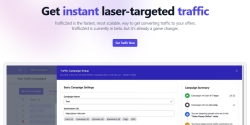
Get instant targeted traffic to any offer. You have full control of your campaign as you can stop and start it anytime you wish.
I ran one campaign and got 175 leads!
In fact, I started getting clicks from the moment I published my ad. It was super easy!
I am currently running a second campaign and so far, I have gotten 262 leads.
What I Like
Easy to set up a campaign you choose niche, make money online, weight loss or health.
They recently added categories for English tier one countries and one for international tier countries.
It also allows you to pick traffic providers or leave it blank for all. Also, you pick countries or leave blank for all as well as devices, operating system, and traffic tags such as email, engaged, mixed, funnel, excess clicks, Facebook ads or webinar registrations. If you want all tags, you just leave it blank.
It allows you to set the maximum clicks, total & daily budget and for unlimited you can just leave them all blank.
What I Dislike
Really nothing but it might be helpful to have more tutorial videos. There is only one which appears on their main web page, and I don't see any videos inside the affiliate account.
Final Verdict
This site was recommended to me and so I decided to give it a try. I will let this campaign run for 10 days look at my results and then run another one. Will update my results here as I go along but so far it delivered leads quickly.
I set up and ran 1 campaign, spent $300 and got 175 leads not sure if I got a sale or not but I am promoting a high-ticket offer. I am pleased with the results, so I am running another campaign and testing with different offers. This is my go to number #1 traffic source that gets me leads fast to build my email list and generate leads and sales and doesn't break the bank and I have referred over 200 people!
Visit Trafficzest.com
Get instant targeted traffic to any offer. You have full control of your campaign as you can stop and start it anytime you wish.
I ran one campaign and got 175 leads!
In fact, I started getting clicks from the moment I published my ad. It was super easy!
I am currently running a second campaign and so far, I have gotten 262 leads.
What I Like
Easy to set up a campaign you choose niche, make money online, weight loss or health.
They recently added categories for English tier one countries and one for international tier countries.
It also allows you to pick traffic providers or leave it blank for all. Also, you pick countries or leave blank for all as well as devices, operating system, and traffic tags such as email, engaged, mixed, funnel, excess clicks, Facebook ads or webinar registrations. If you want all tags, you just leave it blank.
It allows you to set the maximum clicks, total & daily budget and for unlimited you can just leave them all blank.
What I Dislike
Really nothing but it might be helpful to have more tutorial videos. There is only one which appears on their main web page, and I don't see any videos inside the affiliate account.
Final Verdict
This site was recommended to me and so I decided to give it a try. I will let this campaign run for 10 days look at my results and then run another one. Will update my results here as I go along but so far it delivered leads quickly.
I set up and ran 1 campaign, spent $300 and got 175 leads not sure if I got a sale or not but I am promoting a high-ticket offer. I am pleased with the results, so I am running another campaign and testing with different offers. This is my go to number #1 traffic source that gets me leads fast to build my email list and generate leads and sales and doesn't break the bank and I have referred over 200 people!
Visit Trafficzest.com


Jay Valdor's review...
My experience with the program so far
Exit Traffic Network is a traffic generation platform designed for online marketers who want to promote affiliate offers, capture leads, and increase exposure for their business opportunities. The platform focuses on providing affordable advertising solutions while giving members access to a network of active marketers looking for online tools and opportunities.
What I Like
One of the biggest advantages of Exit Traffic Network is its simplicity. The platform is easy to navigate, making it beginner-friendly for marketers who are new to traffic exchanges and online advertising. I also like that it offers affordable promotional options compared to expensive paid ads on social media platforms.
Another positive feature is the ability to generate consistent exposure. Members can regularly promote landing pages, affiliate offers, and lead capture pages to an audience already interested in online marketing. This makes it a useful tool for list building and increasing brand visibility over time.
The community aspect is another strong point. Since many users are marketers themselves, there is potential to connect with people actively searching for business opportunities and marketing resources.
What I Dislike
One downside is that traffic exchange style platforms often require patience and consistency. Results are not always immediate, and conversions can vary depending on the quality of your offer and follow-up system.
Another issue is that some traffic may not be as targeted as premium advertising methods. While the platform can generate views and clicks, users still need strong landing pages and effective email marketing to turn traffic into sales or subscribers.
Final Verdict
Overall, Exit Traffic Network is a solid low-cost traffic source for affiliate marketers, network marketers, and online entrepreneurs looking to build exposure and grow their email lists. It works best for people who understand the importance of consistency, list building, and follow-up marketing. While it may not replace premium advertising platforms, it can still be a valuable addition to a complete online marketing strategy.
Visit Exittrafficnetwork.com
Exit Traffic Network is a traffic generation platform designed for online marketers who want to promote affiliate offers, capture leads, and increase exposure for their business opportunities. The platform focuses on providing affordable advertising solutions while giving members access to a network of active marketers looking for online tools and opportunities.
What I Like
One of the biggest advantages of Exit Traffic Network is its simplicity. The platform is easy to navigate, making it beginner-friendly for marketers who are new to traffic exchanges and online advertising. I also like that it offers affordable promotional options compared to expensive paid ads on social media platforms.
Another positive feature is the ability to generate consistent exposure. Members can regularly promote landing pages, affiliate offers, and lead capture pages to an audience already interested in online marketing. This makes it a useful tool for list building and increasing brand visibility over time.
The community aspect is another strong point. Since many users are marketers themselves, there is potential to connect with people actively searching for business opportunities and marketing resources.
What I Dislike
One downside is that traffic exchange style platforms often require patience and consistency. Results are not always immediate, and conversions can vary depending on the quality of your offer and follow-up system.
Another issue is that some traffic may not be as targeted as premium advertising methods. While the platform can generate views and clicks, users still need strong landing pages and effective email marketing to turn traffic into sales or subscribers.
Final Verdict
Overall, Exit Traffic Network is a solid low-cost traffic source for affiliate marketers, network marketers, and online entrepreneurs looking to build exposure and grow their email lists. It works best for people who understand the importance of consistency, list building, and follow-up marketing. While it may not replace premium advertising platforms, it can still be a valuable addition to a complete online marketing strategy.
Visit Exittrafficnetwork.com
It's been just a little over a month since I signed up with the Plug-in-Profit-Site and my experience so far has been positive. In fact, I'm very pleased with my progress, and what I've learned in this short time. Going in, I knew that the Plug-In Profit Site (PIPS) was created by Stone Evans, and is one of the longest-running "Done-For-You" affiliate marketing systems on the web. What I didn't know is how little I actually knew about the whole business of affiliate marketing, even though I'm not exactly new at it.
I joined the program about 10 years ago but fizzled out after a few short months for several reasons. The biggest problem was that I joined all the programs that were offered, and with little spendable income, I started going broke fast. Instead of making some adjustments, I just quit. Big mistake.
Now, with more experience under my belt, a few lessons learned, and some changes in PIPS itself, I decided to give it another go. I'm already gaining subscribers to my list and have several new signups in the program under me. And I know I'll stick with it this time because I'm older and wiser, and I know my budget.
Although PIPS offers easy free entry for beginners, it may also feel a little restrictive or "dated" to seasoned marketers. But that shouldn't hold anyone back because all the programs presented in PIPS stand alone. So, whether you join one and run with it or join them all, is up to you.
Here is a breakdown for both ends of the spectrum.
For Beginners: The "Quick Start" Appeal
For someone who has never built a website or joined an affiliate program, PIPS acts as a bridge to get over the technical hurdles.
Done-For-You Setup: The core selling point is that the PIPS team sets up a WordPress website for you, pre-loaded with affiliate offers and a blog. This eliminates the "how do I build a site? " frustration.
Structured System: It plugs you into several reputable, long-standing affiliate programs. You don't have to hunt for what to sell. PIPS introduces you to each of the programs, one by one in the 30-Days to Success guide. This eliminates the 'where do I start? ' frustration. Some of the marketing still points to five income streams, but the fact is there are now 10 money-making programs.
Education: The "30 Days to Success" training guide is revised and updated, which serves as a step-by-step guide to building your business, starting with traffic generation and building your list. Also, one of the money-making programs offered is Wealthy Affiliate, an online university for internet marketers. Well worth the fee to become a premium member.
The Reality Check: While the setup is "free, " you are instructed to sign up for the various programs and services that power the program. Although most are free to join, you will be encouraged to upgrade to a premium level which involves monthly costs. That's okay, and shouldn't be a surprise, but beginners should beware of getting in too deep financially too early. Whether you upgrade or not is up to you. Upgrading to only one, or more than one program should be viewed as a business startup cost, not a "get rich quick" scheme.
️ For Experienced Marketers: The "Multiple Streams" Strategy
Experienced marketers usually value control over DFY, but PIPS can still serve a specific role.
Instant Infrastructure: If you are looking to enter the "Make Money Online" niche quickly without having to design a new funnel from scratch, PIPS provides one you can customize.
Stacking Residual Income: The system is designed around recurring commissions. For an expert who already knows how to drive traffic, plugging that traffic into a PIPS funnel can create a steady stream of passive renewals.
Customization Freedom: Since the site is built on WordPress, experienced users aren't locked into the default templates. You can change the theme, optimize the SEO, add high-ticket back-end offers, or integrate advanced AI-driven content tools.
What I Like / Dislike
I think what I've written so far gives both. I really can't think of any cons other than the few I've already mentioned above. Stone has been around for a long time and has perfected his system. If you follow the 30-day guide you will have success.
The Verdict: Is the Plug-in-Profit-Site Viable in 2026?
Definitely YES, but with caveats. PIPS is a legitimate, proven business system, but not a magic "money button. " As with any real business, you'll get out of it what you put into it.
For Beginners: It's an excellent "training wheels" system and can teach you, among other things, how the moving parts of an online business work together.
For Pros: It's a "business-in-a-box" that saves time, and allows you to use your own skills to 'stand out from the crowd' by customizing the standard templates.
Even for beginners, the key to succeeding with a PIPS site is personalization. Don't just leave the "stock" content. Once you've had some time to learn, use AI tools to rewrite articles and add your own voice to the email follow-ups to stand out from other affiliates.
Oh and by the way, if you value great customer service and support, PIPS will not disappoint. Stone and his team will answer every question you have, and go the extra mile to help you succeed. If you're thinking about it, don't hesitate to give it a try... It's free to start. It may not be for you, but it won't cost anything to find out.
Visit Pluginprofitsite.com